At Freres Engineered Wood, our business philosophy has always been to do more with less and to use every bit of a log that arrives on our property. Efficient use of a valuable natural resource—whether through renewable wood products or biochar production—is at the heart of sustainability, but it also makes financial sense. We have paid for the cutting, logging, transport, and processing of each log into renewable wood products for the construction market and developing markets for byproducts from our primary markets keeps us financially competitive.
We have been operating biomass cogeneration facilities for more than 17 years, producing both electricity, which is sold to utilities, and heat, which is used in our production processes. The byproducts from cogeneration are basically a mix of material that are either not fully combusted or unable to be combusted in the process.
The obvious materials that cannot be combusted in the process are rock that is entrained in the biomass fuel and metal, such as nails or fasteners, from ground pallets or reclaimed lumber. Another portion of the biomass fuel that can’t be combusted is an ash product that is made up of soils and sands that are necessarily taken up in bark or wood of a tree during its lifetime. This is very similar to what you would see left in your fireplace after a cozy fire in your home.
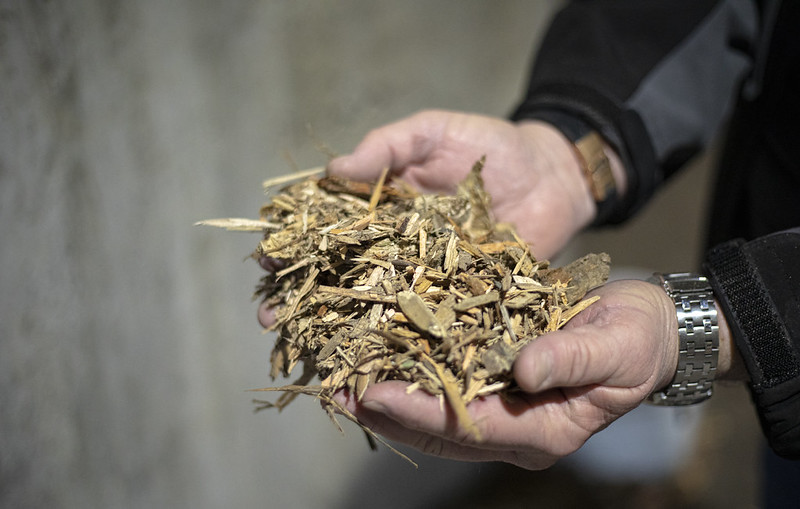
The not-fully-combusted portion of the byproducts from cogeneration consist of a high-carbon char material that has traditionally been combined with the residual ash from combustion and disposed of in landfills. It is important to note that much of the biomass combusted in our facility could have been destined for landfills without providing benefits of electricity or heat energy, and at much higher volumes. However, as I mentioned previously, we don’t like to waste anything.
We are happy to report that we, along with partners, are developing markets for these byproducts and turning waste products into beneficial products, and a potential cost center into a revenue stream.
With the installation of a screening system at the end of 2024, we are producing a high-quality biochar that has multiple potential uses from agriculture to concrete and plastics. We have performed many tests on different screen configurations and sizes and are currently screening biochar size greater than 1mm and less than 6.5mm from our system. We have found this size of material from our particular reactor maximizes the carbon content, improves the nutritive characteristics of the product, and provides a consistent size for our customers.
We continue to improve the system to meet the needs of the market. For agricultural markets specifically, we have worked with partners such as Pratum Coop, Valley Environmental, and CO2 Trust to help develop opportunities. These companies understand the wide array of benefits of using biochar such as improving soil structure, enhancing water and nutrient retention, and boosting microbial activity.
We have also worked with partners such as the USDA, Oregon State University, and Santiam Valley Ranch to explore opportunities for additional environmental benefits, such as remediation of polyethylene contamination in soil. All these benefits are in addition to providing carbon sequestration in the soil and reducing Greenhouse Gas emissions. There are exciting new prospects for the use of biochar and we look forward to developing this market further. This is complicated at times with competing interests such as established firms that may see the introduction of biochar into agriculture markets as a risk to fertilizer sales. Our message has been to come on board and work with us.
It doesn’t stop there. Innovative new uses from biochar and even ash byproducts have potential uses in concrete applications. We continue to work with innovative companies and organizations such as Solid Carbon, Beltertech, and the Synthetic Aggregates Association. Though we are obviously proponents of wood in construction, there are uses where concrete is just the right product for the job, and these companies are leading the way to reduce the environmental impact of concrete and encourage the use of recycled products in concrete applications.
We are excited to play a role in the circular economy, supporting renewable energy, reducing the use of natural resources, recycling products, and regenerating natural systems.
Subscribe
We’ll send you a notification when a new story has been posted. It’s the easiest way to stay in the know.