Company founder T.G. Freres purchased his first timber contract from the General Land Office in 1936. Ten years later, the General Land Office would merge with the Grazing Service to form the Bureau of Land Management.
T.G. Freres owned a sawmill above the North Fork of the Santiam River which had the largest logging camp in the Santiam Canyon because he allowed wives and children to live at the camp.
Some of the contracts were ten-year terms because the area was undeveloped and roads had to be built to access the timber sales.
Over the decades, the company built out roads through the forest developing the area for settlement and growth.
During the Great Depression, T.G. Freres built Highway 22 across the Santiam Pass and Highway 101 along the Oregon Coast, because he owned road building equipment.
Road building supported T.G. and his crew through the Great Depression when lumber could not be sold at any price.
Ed Schroader, who would later become Oregon’s State Forester, once told me he was road building on the Santiam Pass when T.G. received word that his first son was born. That was July 20, 1929, and that boy named Bob grew up to be my dad.
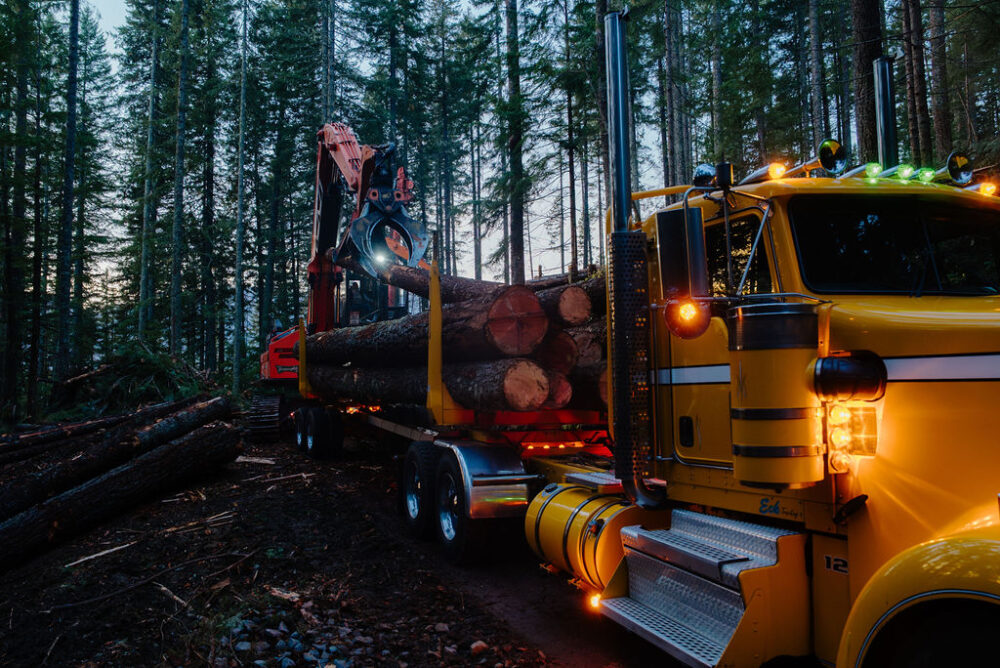
After World War Il, American Gl’s returned home and the baby boom began. The boom required housing and Freres Lumber expanded to meet demand. The company began purchasing timber contracts from the Detroit District of the Willamette National Forest, the Salem District of the Bureau of Land Management, and the Clackamas Marion District of the State of Oregon.
The mix of timber sales purchased by the company from 1970-1990 consisted of 75% U.S. Forest Service (USFS), 15% Bureau of Land Management (BLM), and 10% State of Oregon Department of Forestry (ODF).
From 1946 to 1990, USFS timber contract officers’ word was law and it was never challenged.
Environmental lawyers began suing the agencies to stop timber harvesting and achieved injunctions to stop logging. The Clinton/Gore Administration was intent on stopping logging with their NW Forest Plan and they so frustrated the men and women of the agencies, that the experienced personnel left the agency in droves or transferred out.
The avalanche of litigation caused the agencies to lose the skill and will to sell timber. 60 timber dependent communities in Oregon and 70 more in Washington were decimated when hundreds of mills closed in the 1990’s and few towns have ever recovered. An enviable rural lifestyle suffered as its social fabric ripped apart.
The USFS harvests reached 12 billion board feet annually nationwide with the Pacific Northwest cutting about one half the national total.
The Forest Service was once named the second most admired agency in the Federal Government behind the dam-building Army Corp of Engineers.
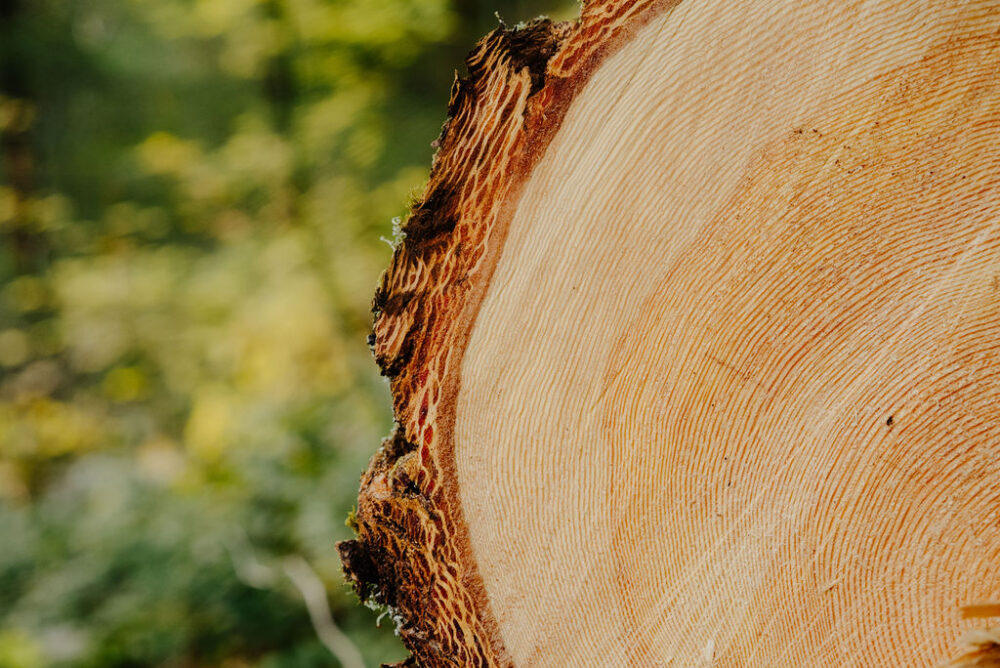
Since the inception of the N.W. Forest Plan in 1993, the agencies have not sold 10% of the volume of timber the agencies cut in their heyday. The result is 1 billion tons of ingrowth in Oregon, as well as 150 billion board feet not harvested in 30 years, causing a huge fuel buildup and contributing to the fires we’ve experienced in recent years.
Environmental lawfare waged against the agencies is the cause of the fires and the degradation of our forests.
Over the past three decades, our company has relied on USFS and BLM thinning sales, which matches our niche for engineered wood products.
Freres Lumber has been the largest purchaser of BLM contracts in Oregon and the U.S. for at least the last 15 years. We enjoy very positive relationships with agency personnel.
Presently, Michelle King, Detroit District Ranger, has been very responsive to our operational needs. She’s the best Ranger we’ve had in decades.
The Salem and Eugene Districts of the BLM have extraordinary people achieving as much as possible given their legal constraints.
The Willamette Forest Supervisor, Robert Sanchez transferred from the nearby Siuslaw Forest, so he has a lot of local experience at a time when the agency is being asked to do more with less. We appreciate Mr. Sanchez’s recent visit and MPP plant tour.
The 2018 Interior Omnibus bill allowed 20-year contracts and gave preference to use “innovative wood product technology.” It specifically mentions bidders producing cross laminated timber, which we do. So, we hope for a 20-year contract to provide our company and community with stability.
Subscribe
We’ll send you a notification when a new story has been posted. It’s the easiest way to stay in the know.